 Guide topic preview
Prepare MTS footage for iMovie
MTS is usually one file inside an AVCHD camera structure, not a complete project by itself. Current iMovie releases can import many supported cameras when the full card structure is present, but an isolated clip or an unsupported recording mode may fail even though the file plays elsewhere.
Keep the original card folders and test native import first. If iMovie cannot read the isolated MTS clip, create a ProRes MOV editing copy that matches the source dimensions and frame rate. This adds storage but avoids relying on missing camera metadata during the edit.
Try the complete AVCHD structure first
Copy the entire camera card to a working drive instead of moving only the .mts files. In iMovie, import from the camera archive or use the file import workflow supported by the current release. Confirm clip duration, audio, and motion before deciding that conversion is necessary.
Create ProRes for isolated MTS clips
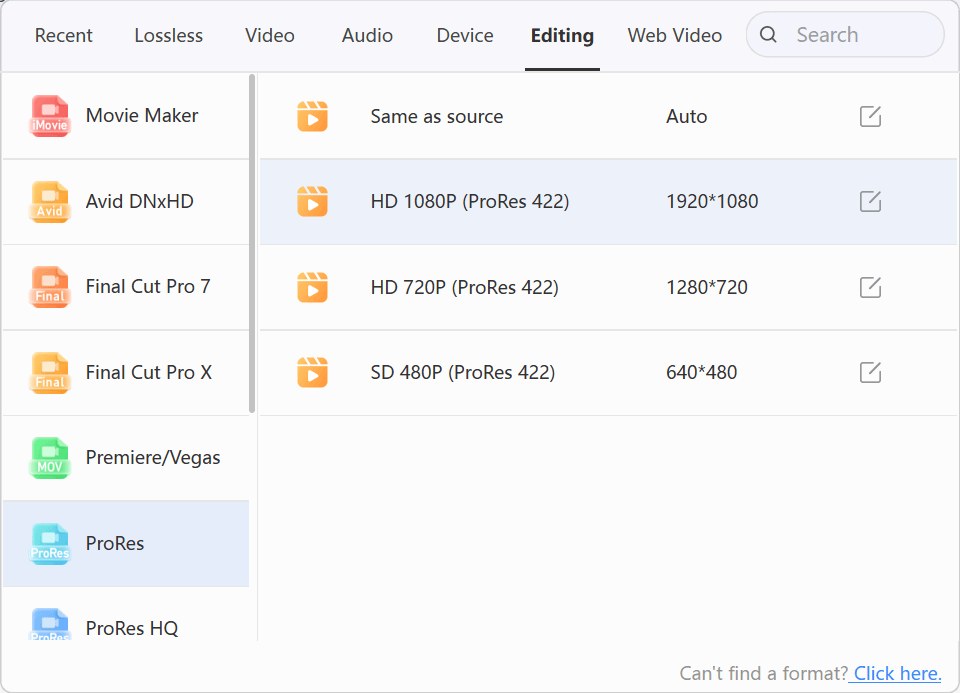
When the card structure is unavailable or native import remains unreliable, choose Editing > ProRes. Retain the source resolution and frame rate unless the project requires a deliberate change; do not use a delivery preset simply because it produces a smaller file. Import one output into iMovie and check cadence, picture, audio channels, and sync.
Verify the iMovie editing copy
Review the beginning, middle, and end of the test clip, including motion-heavy scenes and dialogue. Keep the original MTS files until the project and every converted clip have been verified, especially when a batch combines recordings from different cameras or recording modes.