Video and audio guide

Convert AVI files for playback or editing

Identify the codecs inside an AVI file and create a compatible playback or editing copy only when the destination requires it.

Updated September 4, 2026By

The free version limits many processing operations to the first three minutes. Check compatibility and trial limits.

  • Media filesVideo or audio files
  • Choose MP4Output matched to this workflow
  • General playback or sharing checkVerify before batch processing

Problem and solution

Match the output to its destination.

Check the codecs inside the source container and the requirements of the target player, editor, or device before converting.

AVI is a container

An AVI filename does not identify the video or audio codec inside the file. Compatibility depends on those codecs, their bit depth and frame rate, and whether the destination still provides the required decoder.

Choose an output for the destination

Use MP4 with H.264 and AAC for broad playback when the source does not already work. For editing, choose the application-specific profile or an intermediate codec that matches the project. Converting an AVI file cannot improve source detail that is not present, and every lossy transcode should be evaluated for quality.

Do not install an untrusted legacy codec pack simply to open one file. A compatibility copy isolates the old decoder requirement from the current editing or playback system.

Check the result

Preserve aspect ratio and frame rate unless the destination requires a change. Test picture, motion, audio, field order, and sync, especially with older AVI files that use interlaced video or uncommon audio codecs.
Solution direction

Apply the solution in the workflow below.

Identify the codecs inside an AVI file and create a compatible playback or editing copy only when the destination requires it.

Three-step workflow

Create and verify one test output before processing the full batch.

Identify the codecs inside an AVI file and create a compatible playback or editing copy only when the destination requires it.

01

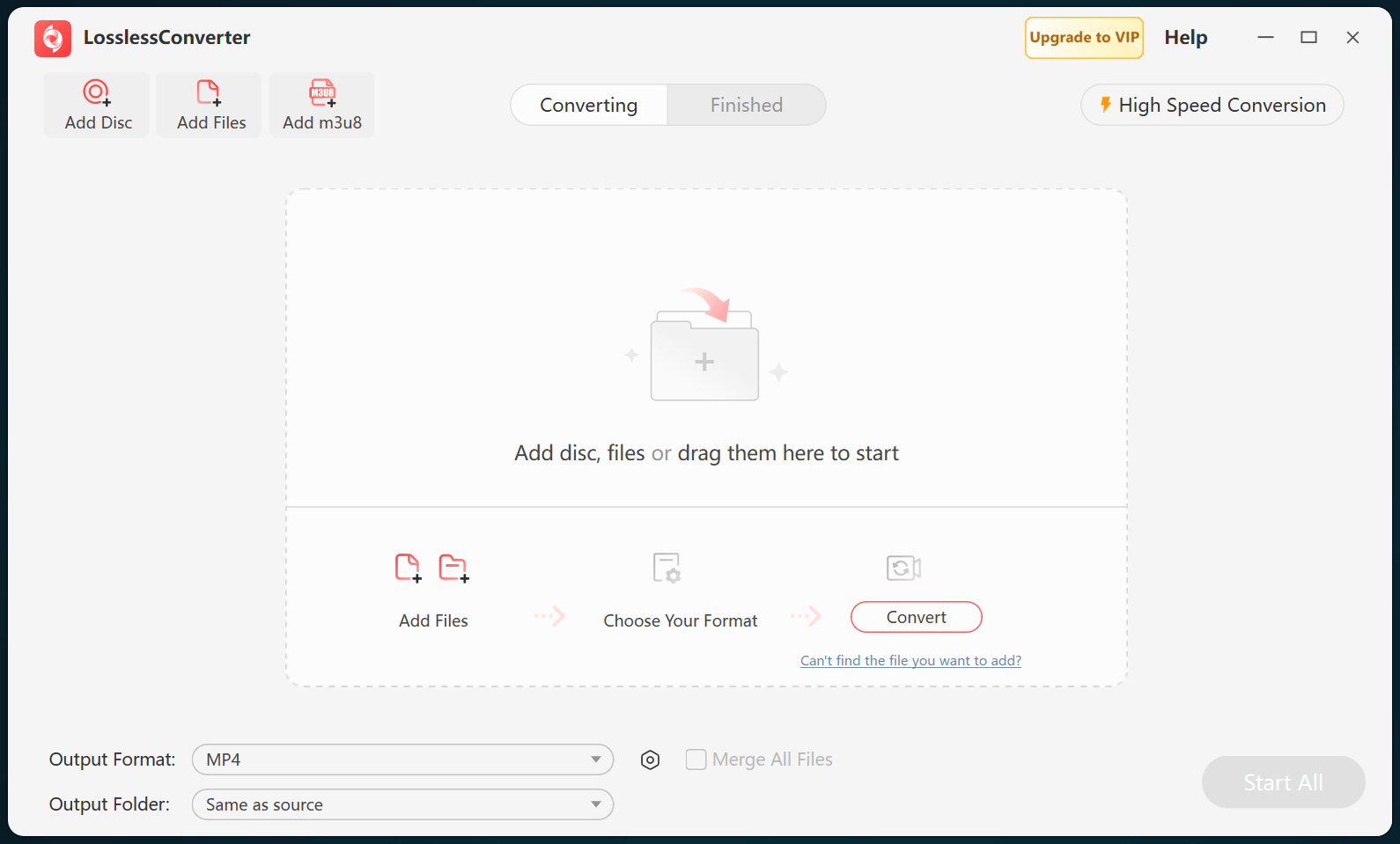
Add the source

Load the AVI files that the destination cannot decode

Open LosslessConverter and select Add Files. Add the AVI files that the destination cannot decode and select the files required for this workflow.

LosslessConverter main window with the source controls visible
Source toolbarLoad the source from the main toolbar.
02

Create a broadly compatible file

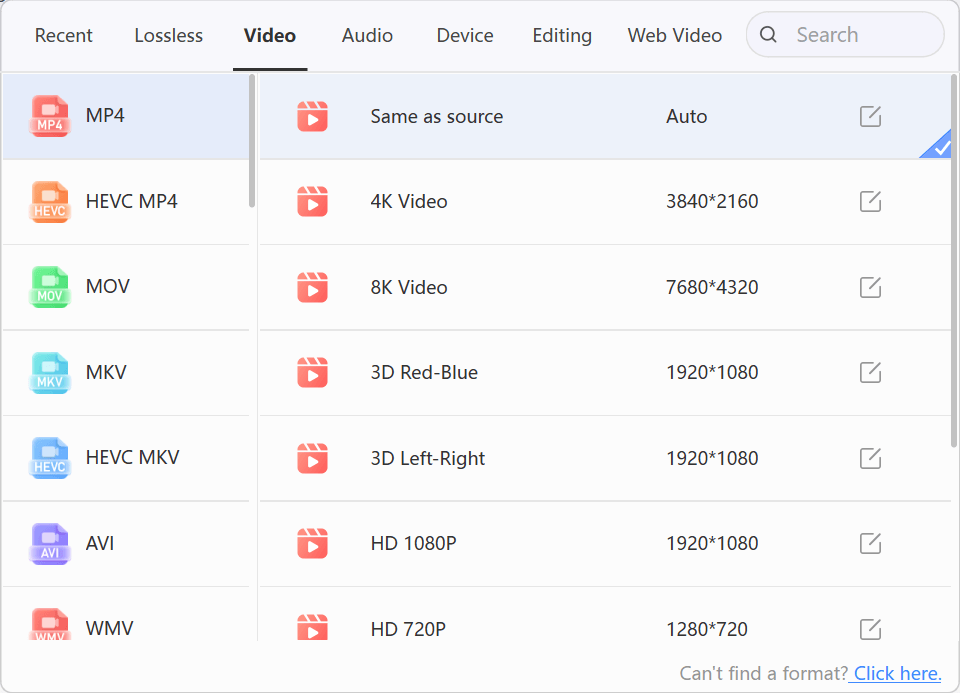
Choose Video > MP4

Open Output Format, select the Video group, and choose MP4. Start with Same as source, then change resolution only when the destination requires it.

LosslessConverter Output Format menu with Video and MP4 selected
MP4Select Video, then choose MP4.
03

Create the current output

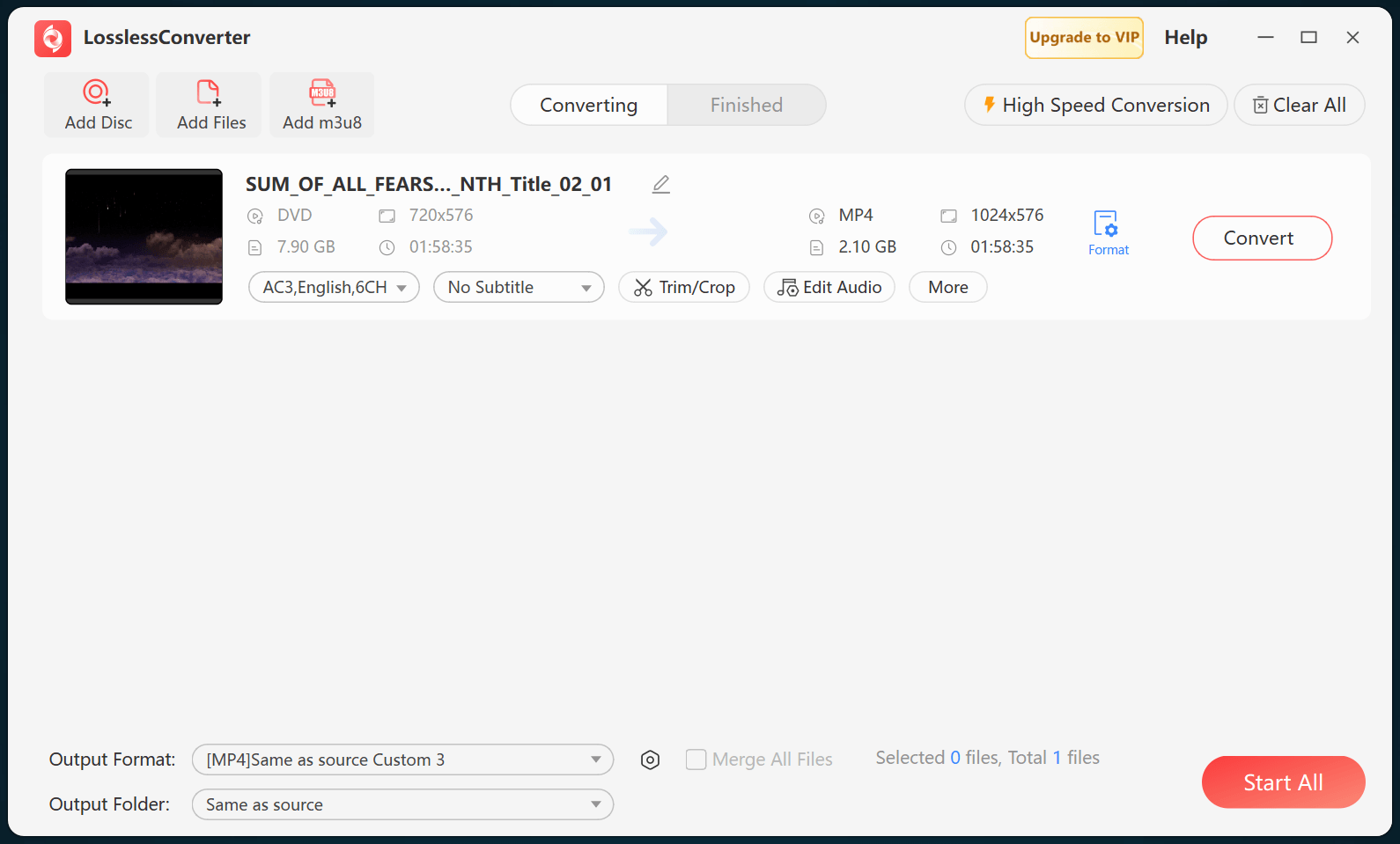
Select Start All, then verify in general playback or sharing

Choose an output folder and select Start All. When processing finishes, open the MP4 file in the destination and verify picture, frame rate, field order, audio, and sync.

LosslessConverter main window with Start All ready at the lower right
Start AllRun the task, then verify the result.

Try it with your own media

Process one file, verify the result, then run the full batch.

The free version limits many processing operations to the first three minutes. Check compatibility and trial limits.